Search This Blog

Sunday, September 6, 2015

The SWAN STUDY: Gender, Identity and Menopause


I sit opposite Lila [1], the 25-year-old research assistant, in a small room at a satellite office of Mass General Hospital. She is warm and professional, and we have already discovered that she went to college at the same university where I went to graduate school. She took classes with some of my favorite professors, and we may have been in the same room at one point, when I came back to give a talk on campus. This is a nice ice-breaker. But now, in this room, Lila is in the driver’s seat. She has just finished asking me a load of questions about my health, lifestyle, and social networks. I will be there a total of four hours by the time I complete the entire process, which includes a bone density scan and a few other tests they’ve added this year.

SWAN AA woman hot flashIn 1996, right after I completed my Ph.D. in Sociology, I was randomly selected as one of 3,302 women from diverse racial/ethnic backgrounds to participate in this mid-life women’s health study called SWAN – or Study of Women's Health Across the Nation. The study is following women as we transition through menopause, to better understand the physical, biological, psychological and social changes we experience during this period. SWAN aims to help scientists, health care providers and women “learn how mid-life experiences affect health and quality of life during aging”. [2]

SWAN participants or “subjects” were all between 42 and 52 years old “at baseline” – that, is, when the study began – and we represent seven cities around the country, including my own city of Boston.

When I got the call inviting me to join the SWAN study, I had just completed a lengthy project that involved a lot of interviewing. I welcomed the opportunity to answer someone else’s questions! It also felt great to be a part of important research that had the prospects of influencing medical science. But when I said "yes" to participating in SWAN nearly 20 years ago, I could not have predicted that I would be interviewed by at least 10 or more 20-something research assistants, most of them en route to medical school following this "real-life" experience. 


Last year, there was a funding hiatus for the study. I was having a tough year myself and barely noticed that I hadn’t gotten my annual call to set up an appointment. Then a month ago, a letter arrived. SWAN was back in biz, and I’d be getting a call soon! I was thrilled that the study was re-funded in this era of budget cuts for basic science and social science research. I was also feeling grateful that my health was back on track. It struck me that SWAN gave me a regular opportunity to reflect on my life’s circumstances, and to think about how I’m handling growing older, even if it’s only because of a series of questions read to me by a young research assistant whom I've just met.

Lila was trained to draw blood, and as she jabs me with the needle, I think, wow, she’s pretty good. We continue to chat, as she measures my waist and hips, clocks how fast I can walk down the narrow hallway, and how long I can balance in a variety of different positions. I'm feeling pretty cocky, until we get to the cognitive test, which they instituted about four years ago. Even though I think my memory is pretty good, being quizzed by a millennial is unnerving. I tell Lila that this test makes me anxious, and she says “yeah, everyone hates it”. That’s only somewhat reassuring, but I appreciate her attempt to normalize my response. Once it’s over – after I spat back a series of numbers and letters in order, and re-told a story about three children in a burning house being saved by a brave fire fighter – I tell myself, “good enough”. That was something my father used to say in moments of stress.

The SWAN Study has taken care to ensure that we are a diverse sample of participants.
Prevalence of hot flashes by race/ethnicity
In Boston, researchers over-sampled African-American women, meaning that the study has intentionally included a larger percentage of African-Americans than are represented in the general population. Other cities have ensured that the sample includes large numbers of Chinese, Japanese, and Hispanic women. This oversampling strategy allows researchers to investigate the influence of race and ethnicity on health outcomes of women as we age.

SWAN-affiliated researchers, Drs. Robin Green and Nanette Santoro, found that most symptoms of menopausal women varied by ethnicity. They write,

“Vasomotor symptoms were more prevalent in African-American and Hispanic women and were also more common in women with greater BMI, challenging the widely held belief that obesity is protective against vasomotor symptoms”.

They also found that vaginal dryness was present in 30-40 percent of SWAN participants at baseline, and was most prevalent in Hispanic women. But even among Hispanic women, “symptoms varied by country of origin”. The researchers conclude that “acculturation appears to play a complex role in menopausal symptomatology” and that “ethnicity should be taken into account when interpreting menopausal symptom presentation in women”.

By including an ethnically diverse sample, the SWAN Study is able to compare the experiences of women from varied backgrounds, which has pointed to important differences that should be of great benefit to health care practitioners. Moreover, SWAN researchers provide participants with information about our health, and flag issues we should explore further. For example, I discovered that I had high cholesterol, something that runs in my family. I’m now being monitored by a specialist, who asked me to take a very lose dose of a Statin. And overall, I’m more conscientious about my diet. The upshot is that my cholesterol levels are under control.

Gathering the SWANS...

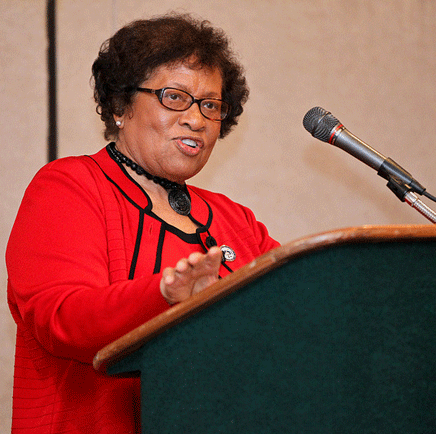
Jocelyn Elders, former U.S. Surgeon General
In the past couple of decades, the SWAN team held a number of gatherings to bring Boston SWAN “subjects” together. It's awesome to be in a room with hundreds of women with one thing in common: we are mid-life women who have gone through menopause! What fun to talk about all the crap we are experiencing without feeling judged or worrying that we might be boring someone.

The first gathering I attended offered workshops where “experts” could answer our questions about sleep (like hot flashes keeping us awake) or provide us with alternatives to Hormone Replacement Therapy. One year, SWAN researchers organized an event that featured the brilliant and outspoken Jocelyn Elders, former U.S. Surgeon General who was a lightning rod for speaking her mind, in support of legalizing marijuana, the distribution of contraceptives in schools, and even suggesting that masturbation might be a means of preventing young people from engaging in riskier forms of sexual activity. Sitting in a diverse crowd of mid-life women and cheering for Elders, whom I have admired for years, was positively thrilling.

Lila tells me a little about this year’s gathering, which I unfortunately missed. I learn that one of the Boston-based Principal Investigators, Dr. Joel Finkelstein, is a serious art aficionado and at the last SWAN Study gathering, he showed a series of paintings by an older woman. His message was that we can continue to grow and be creative as we age. When the interview is complete, Lila hands me my gift. In past years, it has been a cup or a small tote bag, marked with the graceful SWAN logo. But this year, it’s a small box, the top graced with a floral design from this artist.
Gift from SWAN Study
In the abstract of his 2014 application to the National Institutes of Health, Dr. Finkelstein concluded by saying, “SWAN will fill important gaps in understanding the impact of the menopausal transition and mid-life aging on women's health and functioning in the postmenopausal years. Accordingly, it will provide useful information to guide clinical decisions in mid-life and beyond in women who have diverse life experiences and socioeconomic and racial/ethnic characteristics”.

I'm grateful to be a part of this longitudinal study, to know that the aggregate data being collected reflects a diverse population of women, and that we are collectively contributing to scientific knowledge that can improve the lives of women as we age.

Finally, here’s a great clip from Menopause, the Musical!, just for fun:  https://www.youtube.com/watch?v=ndFBFXV3jjs


[1] Fictitious name
[2] The SWAN Study is co-sponsored by the National Institute on Aging (NIA), the National Institute of Nursing Research (NINR), the National Institutes of Health (NIH), Office of Research on Women's Health, and the National Center for Complementary and Alternative Medicine.

Wednesday, July 8, 2015

Interview with Mindy Fried by UK Writer/Musician Melz Durston: "Jamaica Plain Porchfest Co-Producer Mindy Fried is ready to rock the neighborhood
!"


Melz Durston:  This weekend, Jamaica Plain will come alive with the sounds of local songwriters and the scents of citronella burning on the breeze. Inspired by Somerville’s annual community gathering, Mindy Fried and Marie Ghitman established JP Porchfest officially last summer, and this year, the duo sees the culmination of their hard work unfolding all over the neighborhood. Featured at Saturday’s all-day festival are more than 130 musicians playing across 72 porches, including Mark Lipman, Sugarcoma, Between Trees, the Isabel Stover Trio, and former Fuzzy member Chris Toppin and her band LOVE LOVE.

Vanyaland caught up with Fried about the behind the scenes work involved in setting up JP Porchfest, the evolution of her community, and her efforts to bring everyone together for the event. For the full list and schedule of performers, click here. 

Melz Durston: Jamaica Plain has its own personality, when you compare it to downtown Boston. How did Porchfest evolve to fit in with what JP currently has on offer, for music-minded folks?
Mindy Fried: There are many neighborhoods throughout the city that have a personality and a life of their own. I have lived in Jamaica Plain for almost 35 years, and when I meet some native Bostonians, my lengthy tenure in the city doesn’t translate to actually being from here! That said, I have seen a transformation in Jamaica Plain over the years. Jamaica Plain, as long as I’ve lived here, has also been a welcoming destination for people in the LGBTQ community.

In the past, you have hosted Chris Toppin (Love Love, Fuzzy) and Mary Lorson (Madder Rose, Saint Low); do you have plans to create a mini festival taking place in just one venue in the future, featuring Boston musicians, or is the whole point of Porchfest, to feature different locations and in doing so, give people who are local to JP, the chance to perform?

Our focus is to create a decentralized festival, one in which the audience moves around from place to place. It’s almost like a backyard barbecue on steroids! We tried to cluster the porches so that the audience could stay within a fairly small radius, and be able to hear five or six bands or solo musicians within the four hour period of the event. This coming year we will expand the hours to six, and we are also expanding the event to other parts of the neighborhood. The whole point of Porchfest is to feature different locations and give local musicians an opportunity to perform.

Do you think that Boston/Cambridge/Somerville/Allston have a passionate undercurrent running throughout their neighborhoods — where musicians are always seeking ways to create?
Certainly, the other neighborhoods you mention, and many others throughout the area, have a lot of creative people looking for ways to connect. Through our experience with JP Porchfest, we found that musicians really welcomed the opportunity to be part of a community building experience. This year, we will have more bands, and we will also include circus arts, theater, dance, and spoken word.

Is there a harmonious collaboration to be found, between existing venues and separately organized events in JP and other neighborhoods that do not rely on established venues?
We are following our instincts as organizers and lovers of music, and are just beginning to make some really nice connections with other groups that are putting on music events. I think that over time, we will explore some of these connections further. But what distinguishes what we are doing from the more traditional performance venues is that we draw from the community — including professionals and aspiring musicians — who perform in the community, and they have an equal opportunity to be part of the event — it is not curated — whatever level of musicianship they have.

Have you noticed a difference yourself, in your home-city, over the years, with people becoming more insular and less likely to go out and enjoy a live show? Especially with online-focused interactions including live streaming of concerts such as Boston formed Concert Window?
That is an interesting question, Melz. As a sociologist, I think a lot about the issue of community and the extent to which people feel isolated and disengaged. In my own experience, I am finding that the people in my universe want even more opportunities for social connection. Every time I think that my street or my community is so unique, I discover that other communities around the country are creating opportunities for people to gather and connect. Consider the phenomenon of “meet ups”, where people use the Internet to find a group of people who share an interest in some sort of activity, but then get together — in person — for a particular event or gathering. One might point to this and say that it is borne out of the lack of community, but I think it speaks to the desire of community and the willingness of people to reach out to create it themselves. As to whether people are going to live shows, I’m really not sure. I know that I think twice about going to a live show these days because of the cost. Right now, there is a touring alternative chamber orchestra that has a storefront in Jamaica Plain called A Far Cry. Some of my friends and I provide housing for them when they are in Boston, in exchange for going to their concert. They’ll be playing at porchfest on Saturday.

In what ways do you hope that JP Porchfest will bring people out and together again?  I think Concert Window regularly ties in with live shows at Club Passim, which keeps this live element…
In order to have a successful event, we realize that we need to work throughout the year to deepen our relationships with people in the neighborhood. We are working closely with a variety of community organizations to reach into neighborhoods where we only had a small presence this past year, to broaden that reach. One of the staff people from a community organization we work with has excellent contacts in all of the Latino media outlets, so this will be tremendously helpful in bringing out this segment of the population. We are continuing to work organizations to ensure that people of all socioeconomic backgrounds are involved. We reflect on what a success the event was last year, even though it was just our first year. We believe this speaks to the hunger for community and the desire to create and consume art.

How much organizing and inspiration has the whole project taken and are there things you might do differently at future Porchfests? 
Organizing Jamaica Plain Porchfest took an extraordinary amount of time and energy, but we loved it. In order to create an event that would go smoothly, we established relationships with the City of Boston arts administrators, the local police, the city’s neighborhood services, and the Office of Inspectional Services. We didn’t want to have any surprises undermine the success of the event. And then we discovered that in meeting with all of these folks, we were creating a community of support that not only helped us avoid problems, but also established the event as part of the City of Boston roster of cool things happening.

Any plans to take them outside of JP or to other cities, or is this a purely local project?
We believe that any community could create its own Porchfest. We have friends all over the country who want to do it. The main barriers are motivation and time. Marie, my co-organizer, has begun writing a simple ‘how to’ guide, and has had one meeting with a musician who would like to organize a porchfest in her community.

Would you bring former GRCB (Girls Rock Camp Boston) or LRCB (Ladies Rock Camp Boston) bands/acts into your program, in the future?
As you mentioned, LOVE LOVE played last year’s porchfest. Now that the event was a success, we would love to work more closely with Chris Toppin and GRCB and LRCB girls and women.

What was it that inspired you to start up Porchfest in the first place?
I am a closet singer and pianist, but definitely not ready for prime time. My inspiration came from a desire to build community through the power of music. Marie, my co-organizer, and I have been friends for many years, co-ran a childcare cooperative when our now adult kids were babies, and we welcomed the opportunity to work together. The experience of organizing JP porch fest was truly wonderful. There was a lot of laughing and inspiration in this experience.

What was the last gig you went to in the Boston area, and have you discovered new local music, through hosting Porchfest and through the people you have met?
The last gig I went to was a concert by Debo Band, which is headed up by Ethiopian-American musician, Danny Mekonnen. A couple of Debo off-shoots played JP Porchfest and they were amazing. So it was thrilling to hear them play in concert. Debo has gotten quite a bit of recognition, and we’re hoping that they’ll still honor us with their musical presence in our home-spun event! 

JAMAICA PLAIN PORCHFEST :: Saturday, July 11 from noon to 6 p.m.
All-ages, free: Full schedule of performers can be found at jpporchfest.org


Saturday, July 4, 2015

Insomnia stories...


The men in my family were easy sleepers. It wasn’t uncommon to see my father and his six brothers lie down on the floor after a big meal and just nod out. Of course, that left my aunts to clean up, after they had also cooked the meal, and I bet they could have used a nap too. At the time, I figured that taking a post-meal snooze was the “way things were” for the men in the family. But gradually, as I developed a feminist consciousness, I resented these lazy guys. As my age gradually crept up to where theirs were back then, I have begun to appreciate their supreme capacity to sleep just about anywhere, anytime. My father was also one of those people who could nod out for five minutes – taking a so-called “power nap” – only to emerge refreshed and able to fully re-enter the conversation when he awoke. 

Later, when he was in his 90s, he began to experience serious insomnia, lying awake for hours and hours throughout the night, going crazy with boredom and frustration. While I sympathized with his dilemma at the time, it wasn’t until I experienced my own sustained insomnia – after a back injury – that I understood how horrible it is to not be able to sleep night after night. I discovered that sleep deprivation steals one’s energy, one’s optimism, and sometimes even one’s sanity. With increasing lack of sleep, the exhaustion compounds and the world becomes slightly, if not majorly, off-kilter. 


Insomnia is a lot of things, which includes having a hard time getting to sleep, as well as waking up early and having a difficult time getting back to sleep. Not surprisingly, it isn’t a contemporary phenomenon. No, we in the so-called modern world didn’t invent it. Insomnia goes way, way back. The term “insomnia” first appeared in 1623, and means “want of sleep”. One of the biggest causes of insomnia, stress, is something that people have been struggling with for eons. It’s just the nature of stress that looks slightly different these days, compared to a few centuries ago. But if you think about it, there are a lot of similarities. 

We’re stressed because we work hard or we don’t have enough work. We’re stressed because we live in a violent world that is unpredictable. We’re stressed if we experience social isolation or prejudice. We’re stressed when we don’t have enough to eat, and don’t know where the next meal is coming from. We’re stressed because our jobs are too demanding or not challenging enough. We’re stressed because we worry about paying our bills. We’re stressed because we don’t feel loved enough, or because we have tension with our partners or our friends. One might call these universal problems, and these stressers will vary based on your economic situation as well as your race, gender and sexual identity. And maybe a few centuries ago, we might have also worried about predators or major diseases that wiped out entire swaths of people. All of these stressors can lead to loss of sleep. 


A lot of famous people are recorded as having suffered from insomnia. Sir Isaac Newton suffered from depression and had difficulty sleeping. Winston Churchill had two beds because if he couldn’t sleep in one, he would try the other. Thomas Edison, like my father, was a cat-napper, because he couldn’t sleep at night. Some insomniacs turned to drugs. Marcel Proust and Marilyn Monroe took barbiturates to help them sleep. English writer, Evelyn Waugh, took bromides to induce sleep. As we know, Michael Jackson died because of a lethal cocktail of medications to help him sleep, including propofal, used for sedation before surgeries, lorazepam, used for anxiety, and a host of other meds, including midazolam, diazepam, lidocaine and ephedrine. He was obviously so desperate to sleep that he was willing to try them all. 

Author and columnist Arianna Huffington calls insomnia a “feminist issue”, and has written columns in Huffington Post lamenting her lack of sleep from jet lag. Another Huff Post columnist, Dora Levy Mossanen, calls insomnia a “smart, devious virus that mutates and changes form every season like the flu virus. Except that this tricky bugger is tuned to our circadian rhythm and is able to change and disguise itself at whim to confuse the heck out of us”. Mossanen does all the “right things”: She doesn’t drink caffeine, goes to bed at a decent hour, drinks hot milk before bedtime, takes warm baths, reads non-stimulating books, listens to guided meditation on her i-pod, and imagines serene seashores. And yet she says, “I toss and turn at the beginning of the night, counting backwards and forwards so many times that if my mind was prone to mathematics, I'd have solved all the mathematical problems of the world by now”. 

For the most part, my insomnia has cleared, but every so often it rears its ugly head. While in the midst of a minor insomniac “relapse”, I asked my friends and colleagues for their insomnia narratives. I wanted to know how long their insomnia lasted, why they thought they were struggling with sleep; what they did when they were awake; how it affected them the next day. I learned that the main causes of insomnia are: 

* Anxiety, the everyday kind like preparing to teach a class, and larger anxieties, like worrying about keeping a job; 
* Depression, which impedes relaxation necessary to fall and stay asleep; 
* Medications, because some meds like decongestants and pain meds keep us awake. Antihistamines might initially make us groggy, but they can cause excess urination which gets us up a lot during the night; 
* Alcohol, which may make you more relaxed, but prevents deeper stages of sleep and can cause you to wake up in the middle of the night; 
* Chronic pain, which is distracting and worrisome and can lead to anxiety, which prevents sleep; 
* Medical conditions, like arthritis, cancer, heart disease and Parkinson’s disease, which are linked with insomnia; 
* Poor sleep habits, like weird sleep schedules, or an uncomfortable sleep environment; 
* "Learned insomnia” – which is worrying too much about not being able to sleep, which makes it hard to get to sleep; and 
* Eating too much before sleeping or eating the wrong snack, which can give you heartburn and make it uncomfortable to fall sleep. 

In response to my call for insomnia stories, only women replied. I know that isn’t because men don’t experience insomnia; but perhaps men don’t want to reveal their sleeping problems publicly, even though I promised confidentiality. (It's not too late, for my male readers!)

One woman said, “You do realize you've opened the floodgates, yes? Amazing topic. Of course, I'm too sleep-deprived and deep into end-of-semester madness to respond right now! Maybe during my next bout of insomnia (perhaps tonite). ;-)” 

Here are a few responses from other insomniacs: 

One woman says, “Funny you should ask, as I am suffering from insomnia just now, maybe a week long bout this time, but by far not the longest ever. I wake up about 4am and cannot fall back asleep if my life depended on it. Not sure why I have such a hard time staying asleep, maybe it's hormonal (menopause) or maybe it's all the craziness at the office (new department chair, no office support as the old secretary retired, research lagging, ...). Often I am not the only one awake, as my spouse is also a stressed-out insomniac. I typically try to fall back asleep, but if it doesn't happen, I get up and read in the living room until I feel exhausted from being up at 4 am. What sometimes works is counting backwards from 100 in another language. Needless to say, the next day I feel a bit out of it, but nothing like the "zombieness" I did when my child used to wake me up. I am not desperate yet, but may try to find my melatonin from the previous bout to get me back on track. Sometimes it works, sometimes it doesn't". 

Another woman says, “My insomnia stories are boring. I get up and clean the house, read, catch up and/or get ahead on my work. That makes me feel like I am not wasting my time trying to fall asleep. Usually that day I am racing, energetic and feel good about all I have accomplished. By that night I am crashing and I pay the next day in bodily aches/pain. Not very exciting…"

Another says, “I have had quite a few episodes of insomnia. There were times when I would go days or even a week without adequate sleep. I would either fall asleep and then wake up in the middle of the night and not be able to go back to bed, or I would just simply stare at the ceiling until I finally fell asleep, only to wake up about every half an hour for the rest of the night. Either way, insomnia sucks! I eventually couldn't take it any longer and sought medical help. Come to find out, I have general anxiety disorder and that was greatly affecting my sleep. Even now – I am on medication- I still have bouts of insomnia when I am highly stressed. My mind is constantly going, so when something important is coming up I find myself having trouble sleeping. In the middle of the night I have tried a number of things: read a book, go to the gym (thank you, 24 hour fitness), eat, watch TV, and try and go back to sleep. As a student, during the day I am pretty much reading, writing, researching, or preparing for a class I TA for. 

"After a night of insomnia, I usually feel terrible the next day. Even if I am tired, I don't try and nap because if I do, the likelihood of getting a good night’s sleep decreases. If I go a few days or even a week without sleep, my brain has pretty much checked out. I go through the motions but I don't feel like I am really all there. Hopefully that makes sense. Insights? I would say that everyone is different and should try different things to help them sleep. I hate taking medicine, even when I am sick, so seeing a doctor was the last thing on my list. I tried doing yoga, eating better, not watching TV or reading at night...but nothing helped me. Being put on medication was a great relief because I sleep really well, for the most part". 

And finally, one of my neighbors says, “Sometimes I look out the window to see who else might be up in the neighborhood. I am tempted to text them or call and get together, maybe we should start an insomniac club”. 

That sounds tempting… I suppose that one strategy I’m employing is writing this post. Maybe “outing myself” as an insomniac will help diffuse the potency of this insidious problem. If I were to characterize my current “brand” of insomnia, it’s “learned insomnia”, meaning that I begin to fall asleep and then just as I’m fading into a hazy fog, my brain says “you’re falling asleep”, at which point I’m awake! Luckily, the problem has lessened since I first put out the call for insomnia stories. May it fade away! 

Tell me your insomnia story! What has helped you overcome your sleeplessness? 


Sunday, June 28, 2015

Life as a "Sometimes Adjunct"


adjunct 1 

Adjunct:  “a thing added to something else as a supplementary rather than an essential part”.
I’ve been teaching Sociology as an “adjunct” for nearly 20 years.  I never liked this descriptor, but I learned early on that most students don’t know or seem to care about my title or my status, and for me, that’s the bottom line. I have found that students are oblivious to stratification within academia – the cascade of titles and honors that starts with part-timers at the bottom, and then officially begins with Assistant Professor, the tenuous first step which initiates the gradual and arduous climb up and up, until – if lucky – one reaches Associate, Full and eventually, at the far end of the career spectrum, Emeritus, the end of the line, after decades of classes taught, research conducted, peer-reviewed articles and books published, talks given and dissertations advised.


Chichén Itzá Pyramid
When prospective parents and students tromp around campus, asking all the right questions, they are rarely prompted to ask one of the most relevant questions:  “Will my professors be part-time (low-paid) labor?” No, if they ask anything related to the status of teachers, they want to know if the professors have doctorates, and often the answer is “yes”, avoiding the issue of labor stratification altogether.

That said, most students just assume that their teacher is the professor, unless that teacher is still a graduate student. In fact, in every undergraduate class I have taught, students insist on calling me “Professor”, even when I tell them to call me by my first name. I generally stop short of telling them about my status in the academic chain; I also don’t tell them that they may never see me again because I’m not sure if I’ll be re-hired. I have had some teaching jobs where students are shocked when, at the end of the semester, they hear I might not be back the following year.  Sometimes, that opens up the conversation about stratification within the academic labor market. After all, this is Sociology, where issues of class, gender and race are paramount. Why not insert one’s own “social location” into the mix?

The increase in employment of part-time, adjunct faculty in academia has become an “issue” for some university systems, especially when union contracts or state laws limit the number of part-time faculty. Despite bloated administrative budgets and the building of new athletic centers and sports arenas designed (in some places) to make an institution more “competitive”, the teaching staff is where pennies are pinched.

Adjunct teaching an add-on rather than central
Teaching as an adjunct is not my “full-time work”; it truly is an adjunct to my career, in which I co-run a small social science consulting group called Arbor Consulting Partners (www.arborcp.com). In other words, thankfully, I don’t depend on this income as my “bread and butter”. Teaching is my passion but it’s really hard to make a living teaching as an adjunct.

I have been lucky to not be at the bottom end of the adjunct pay scale – which can be as low as $2,000 per course, but the wages generally hover around $5,000-6,000 at many research universities, unless you’re teaching at one of the “prestige” institutions. Many adjuncts piece together a string of teaching gigs, sometimes as many as 6 classes per semester and sometimes in different institutions, just to pay the bills. They/we receive no benefits, and while they are teaching a full load, they often don’t have an office – or if they do, they share it with all the other part-timers, so it’s hard to use for meetings with students or to get any work done. Adjuncts can work their butts off and still be poor and disenfranchised.

Adjunct 7 teach for food
Generally, an adjunct functions outside of the system. We’re not paid to go to meetings or advise students. This is fair, given that we’re only paid to teach. But for those who would like to be more involved – and even be considered for a tenure track position – this status can be a liability. New hires in academia are judged for their ability to teach and advise students, and in research universities, they are judged by their academic scholarship.  Adjuncts rarely have time to pursue their own research, and if they do, it’s on their own dime, unless they have sought and received a grant, which is harder to do without an institutional base. Some universities even disallow part-timers from receiving university grants.

Having the capacity to teach many different courses is central to any adjunct’s survival. I have taught a variety of Sociology courses in a range of academic institutions, including courses on aging, sex and gender, feminist theory, work and family policy, gender and leadership, and most recently, a course on Evaluation Research, which is the work I do as a consultant. For some of those jobs, I had a one-year contract, but mostly, I have been teaching by the course and by the semester, with the possibilities of returning, which I have now happily done in three of the institutions where I have taught. Generally, I have either replaced a professor who is on-leave, taught a course that full-time faculty didn’t have time to teach, or more recently, I have taught courses that no one else has the expertise to teach.

One thing that I love about teaching at the university level is the freedom to design a syllabus, regardless of whether a course has been taught by another professor. Not all adjuncts get to do this. Over the years, I have experimented with incorporating the arts into my teaching, and invariably, other professors (those on the ladder) tell me they think it’s really cool. I have been lucky that, for me, teaching as an adjunct is a choice. I have also had some incredible colleagues, supportive and inclusive. But many adjuncts do not feel they are treated as equals relative to full-time faculty.

Unionizing the adjunct labor force


Adjunct Teacher, Otis College of Art and Design, LA
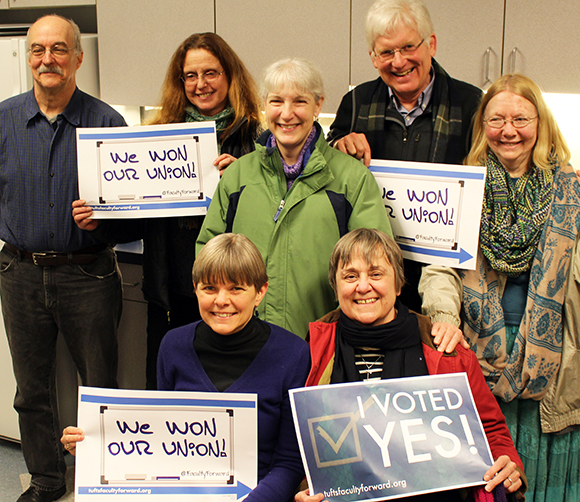
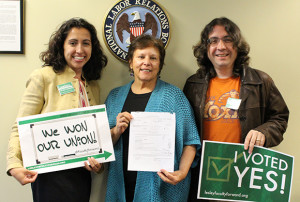
There is a growing movement to unionize this low-paid contingent labor force, and the Service Employees International Union (SEIU) and the American Federation (AFT) of Teachers are two of the major unions now leading the charge nationally. A dozen new union locals have been established, including one at Tufts University, where I got a one-year contract right after I completed my doctorate, and another at Lesley University, where one of my friends, a fully tenured faculty member, played a key role. Both were organized by SEIU.

So where do I stand? I strongly believe that it is in the interests of all parties within academia for Part-time Faculty to be paid well and have good working conditions, including consistency in the courses they teach and multi-year contracts, as this contributes to the overall quality of education at the institution. At the same time, Universities should not rely so heavily on part-time labor. The slow creep of an unstable labor force comprised of part-time contracted workers is a disservice to students, their parents and the institution overall.


Tufts University Adjuncts
At Tufts, part-time faculty members successfully negotiated a contract that included 22% pay raises over a 3-year period, longer-term contracts, and the right to be interviewed for full-time positions in one’s department. In addition, their contract stipulates that adjuncts who teach three or more courses over the academic year will have access to health, retirement, tuition reimbursement, and other employee benefits. This is a major victory for part-timers and the University, overall.

Historically, it has always been challenging to organize “professional” workers, given the notion that labor unions are associated with blue-collar workers, not teachers or nurses or social workers, who are falsely considered “above that”. But frankly, this notion is just a way to hold back the collective strength of workers from having more power. The move to organize adjunct labor – just like the move to organize all workers who are underpaid and undervalued – is critical not just to the individuals who directly gain from union representation; it is also critical for the broader society and economy.


Harvard University Widener Library
A recent article in the Harvard Crimson describes the working conditions for its “non-ladder” faculty, or put in more plebeian terms, adjunct faculty. Harvard can call these workers what they want, but they are still contingent labor. Adjuncts at Harvard and other Ivy’s get paid sometimes twice or three times what adjuncts at less prestigious institutions get paid.  But unlike tenure track faculty, they are subject to short contracts, far lower wages than their colleagues, and lower status than their colleagues. An exception to this is when the Ivy’s hire former politicians or entrepreneurs who command high wages to teach a course because of the prestige they bring to the institution. For the “average” non-ladder employee at Harvard, the institution affords a status akin to a post-doc, a coveted year following the completion of one’s doctorate which may be devoted to research. This is because teaching at Harvard, even as a “non-ladder” employee, carries the imprimatur of a fancy-labeled institution. Surely, one would think, if that institution is hiring this person to teach their students, they must be smart by association.


Core Faculty, Lesley University
Angelica Pinna Perez, Dalia Llera and Jason Pramas, Core Faculty supporting the union vote, Lesley University
Bigger questions must be raised about whether universities are going to depend more fully on lower-waged contracted workers. The system of tenure, where faculty members are essentially hired for life, has been subject to debate for many years, posting the question: Is the tenure system critical to protecting intellectual inquiry, and/or is it a system that rewards decreasing productivity? But this thinking avoids the real issues. The tenure system is not to blame for the rise in part-time contracted labor in academia. We must, instead, look at bloated administrative budgets and the trend to create amenities to attract students, particularly those paying full-freight.

David Kociemba, President of the American Association of University Professors (AAUP) at Emerson College, where he teaches in the Department of Visual and Media Arts, is quoted as saying the adjunct movement is “four decades in the making”, but he was able to finish the union drive at Emerson College in only two months. This just demonstrates how ready some part-time faculty members are to get organized, given the opportunity.

So far, I have not been at an institution during a union drive for adjunct labor. That is perhaps another casualty of life as a “sometimes adjunct”, or any adjunct for that matter, given that these part-time workers aren’t tethered to the institutions where they teach. But I imagine that if I do continue to teach courses here and there, I will eventually sit in the eye of the storm, and instead of supporting the movement from the sidelines, writing blog posts and signing petitions, I will add my voice to the collective. While I don’t count on my adjunct jobs to pay the bills, I wouldn’t mind…

Tuesday, April 14, 2015

Sociologists in the Policy Arena: A Conversation with Tekisha Everette


My first job in Boston was working for Senator Jack Backman, a progressive state Senator who headed up the Human Services Committee on Families and Elder Affairs.  I was considered his “child and family expert”, but I hardly felt like an expert, particularly in that shark tank of policymaking.  I loved and hated that job, the daily tedious business of writing legislation, sitting for hours in meetings, taking orders as the lowest of the low on that totem pole. But I learned how to analyze a state budget, and how bills get passed, and who makes decisions behind which closed doors. I also learned that I wasn’t suited to moving things from inside the system, but I loved being an outsider trying to make the system move. 

Senator Backman sponsored the first universal child care bill in the state, arguing that all children should have access to early childhood education. While this seems laudable now, at the time it was laughable because people felt it was so “out there”, beyond anything that was remotely possible. This was the early 80s, and while women had already been entering the labor force in droves, some politicians were just getting used to it. 

The Governor, a rabid right-wing demagogue, vociferously argued against increasing child care subsidies to poor families, much less even considering universal child care policy. His famous line was that “child care is a Cadillac service”, a “luxury” that the state could not afford, particularly because it was women’s place to stay at home to care for their families. It took several decades for Massachusetts and 39 other states to finally implement universal pre-kindergarten (UPK).

The most compelling part of my job was working with a ferociously committed group of early childhood teachers who fought for more funding for child care programs, including funds to increase child care worker wages. Since my role was as a liaison to a liberal Senator, they lobbied me to take up their cause. Initially I felt flattered that they were trying to convince me to support their issues, but I soon realized that I was "one of them", except that I had some leverage to help them get access to key legislators. 


It was from this group of amazing early childhood education advocates that I learned about the need for government subsidies to defray the high cost of child care for low- and middle-income parents. It was from them that I learned about the high turnover of child care workers because of their low wages - and the negative impact of teacher turnover on the quality of care to children. Not too soon after I left that job, I became a lobbyist for a statewide child care association.

Recently, I organized a panel for the Sociologists for Women in Society winter meeting, and as I looked for speakers who could demonstrate the wide range of jobs that sociologists have in the “applied world”, I discovered Tekisha Everette, a brilliant Sociologist who, at the time, was working as a lobbyist with the American Diabetes Association. Tekisha spoke about why she chose to be an Applied Sociologist, the substance of what she actually does in her job on a day-to-day basis as a lobbyist, and how she incorporates a race/gender/class lens in talking with policymakers about public health issues. Having worked in the policy world, I was particularly moved by how Tekisha uses her scholarship as a sociologist, incorporating analyses of how race, gender and class affect public health policy issues. Here’s a snippet of our conversation: 


Mindy:  Tekisha - why did you choose to do Applied Sociology?

Tekisha: I chose Applied Sociology because I wanted to combine my educational background – political science, policy and sociology – to affect change in society. I wanted to go beyond studying society to applying that knowledge to drive policy change in society. 

M:  Can you tell me a bit about the types of applied jobs you have held?

T:  I am a lobbyist now but I’ve been policy analyst and a liaison between state government employees and a firm of economists. In each position, I have used my research skills as well as my sociological theoretical lens to execute my work. For me, this has been an amazing experience because I am relevant in a variety of spaces and I can alter my voice and perspective based on what is needed in the situation. 

M:  How would you describe the role you play within the organization’s structure?

T:  I am the lead lobbyist for my organization and I lead a team of three lobbyists and one manager. I provide strategic leadership on policy and legislative efforts of the Association. I also serve as a member of senior management for the department and help shape a number of our projects and priorities. Since most, if not all, of our initiatives have to be evidence-based, I spend a fair amount of time reviewing, requesting, and explaining research to support our legislative ideas. 

M:  What does the work of a lobbyist entail?

T:  Interacting with Members of Congress and their staff, the White House and federal agencies, training and helping our advocates to use their experience to gain support for legislative proposals, reading/reviewing research and translating it into policy. 

M:  How do you incorporate a sociological lens in your work?

T:  Since I have come to my organization, there have been a number of times where I've been able to bring a sociological lens to affect decision-making. Overall, I think I have worked to change the way we make decisions to ensure that we take a variety of backgrounds and various interests into account. Being a sociologist gives me the advantage of being able to go beyond the data and making it relevant to policymakers in ways they can understand. My goal is to always be sure I can explain the impact of policy at a localized level - and to incorporate the impact from a gender, race and class perspective.

M:  What drives you to do this work?

T:  I believe that you have to be a able to explain anything you do to your grandma! Perfecting the art of being able to use research and explain it to a variety of audiences is important to me.

Tekisha has just accepted a new position to become the inaugural Executive Director of Health Equity Solutions in Connecticut. The organization is a non-profit focused on addressing health equity issues in Connecticut through public policy, education and advocacy activities. She begins her new position in May, as she takes on another opportunity to have an impact in the policy arena!


Friday, April 10, 2015

Women, menopause, the pharmaceutical industry and horses...


Around 10 years ago, when I was going through menopause, I switched to a new OB/GYN who nearly convinced me to go on Hormone Replacement Therapy (HRT). I had told her that my mother struggled with hot flashes and depression during her “change of life”, as they say, and I was worried about what it would be like for me. As a preventive measure, she prescribed HRT. Jump two frames forward and there I was, standing in line at the local pharmacy waiting to pick up my meds, but feeling very ambivalent. I’ve always been drug-adverse, and I thought, ‘why am I considering taking these meds unless it’s absolutely necessary?’ I was trying to stave off a problem that didn’t actually exist!

Serendipitously, I started to chat with the woman in line next to me, a friend of a friend, who suggested that if I had questions about HRT, I should take a look at Dr. Christine Northrup’s book, “The Wisdom of Menopause”. Even though I walked out of that store with a filled prescription, I never cracked the bottle. Northrup says, “I’ll take my chances with the hormones that mother nature has taken at least 3 million years to come up with”, arguing that women with healthy ovaries and adrenals may not need (HRT). Even for the one-third of women who have had their ovaries removed and may benefit “from a little estrogen or a little progesterone or possibly a little testosterone”, Northrup says that “in no case should these be the conventional hormones that are synthetic. This is important for people to know: you cannot patent a naturally occurring hormone”. (Northrup’s advice about nutritional supplements below.*) 

It turns out that there are some serious reasons to avoid HRT. Medical sociologist, Gayle Sulik, writes:  “Clearly, there is a relationship between the use of synthetic hormone therapies and breast cancer even if the mechanisms are not fully understood. In 2002, when the findings from the Women’s Health Initiative estrogen-plus-progestin study came out, about 38 percent of postmenopausal women in the U.S. were using some type of hormone therapy drug. When the WHI findings hit the news, sales plummeted and breast cancer incidence rates also dropped”.

An article published in the New England Journal of Medicine also linked a sharp decline (6.7 percent) in breast cancer incidence in 2003 with the release of the first Women’s Health Initiative report “and the ensuing drop in the use of hormone-replacement therapy among postmenopausal women in the United States.'”
I later read somewhere that around 40% of women who get their HRT prescriptions filled never take the stuff, and that info validated my choice. The link between HRT and breast and other cancers was too real to me. My mother had had breast cancer, and it seemed like taking these drugs was like playing with fire. Instead I devoured literature on alternative ways to deal with menopause symptoms, drank my soy milk and copped a “bring it on” attitude.

As if there weren’t enough reasons to question the use of Hormone Replacement Therapy, I just discovered another. Call me naïve or sheltered, but it never occurred to me that Premarin – an HRT taken by a number of my friends – was named for what it actually is: Pregnant Mare’s Urine. In other words, the drug of choice for so many menopausal women comes from horses that are “farmed” for this exact purpose. Northrup says, “People will tell you that Premarin is natural–yeah, it’s natural if you are a horse!”


According to an April 5th Boston Globe article by Nestor Ramos,, these horses are kept “inside long barns in the Canadian provinces of Manitoba and Saskatchewan”, lined up in rows of small stalls, “tubes snaking up from under them into vessels nearby”. Geez! Ramos, comments, “It sounds like science fiction — some equine version of “The Matrix,” in which a superior species saps humans for their nutrients — but it’s true: The urine is precious”.

The article is a human interest piece focusing on two women – one, age 70; the other, in her late 20s – who share a love of horses. It turns out that while selling Premarin is a profitable industry, “keeping hundreds of horses pregnant every year” in order to gather their urine has a downside. The mares have babies, and selling the foals for meat is also apparently a profitable business. The elder woman has spent years going back and forth to Manitoba to rescue some of these foals from the “slaughterhouse floor”, but her energy to make this trip has waned, so having a protégé who shares her passion has made it possible for her to carry out this mission, and in a way, build in the potential for someone to carry on when she no longer can make the journey.

I love the story of these two women: one in which the passion and leadership of the “elder” inspires the younger, and the vibrancy of the younger who makes this difficult journey possible. But what if there wasn’t such a lucrative industry around harvesting pregnant mare urine in the first place to supposedly rescue aging women from a natural change in their reproductive cycles? Northrup comments, “The hormones that naturally occur in the human female body have been altered so that the drug companies can justify the R&D programs to patent a hormone and therefore make their money. It’s frightening!”

Check out this Huffington Post piece by investigative reporter Martha Rosenberg, called “When the publication plan is ready, the research will appear”, in which she describes how the marketing arm of a drug company published articles denying the link between HRT and cancer. “Though the marketing firm’s “science” is egregiously flawed — HT has strong links to breast cancer, breast cancer, heart disease and Alzheimer’s — the papers have not been retracted.”

The cultural narrative for menopause, very much aided and abetted by the pharmaceutical industry – is that it’s a medical crisis to be tackled. Women’s natural reproductive functions have long been viewed as indicative of “otherness”, weakness and incapacity, from menstruation to menopause. While many women surely benefit from a medical approach to easing symptoms of menopause, we must question who and what the medicalization of menopause serves, and recognize that menopause isn’t a wasting away, a time in which we go bonkers and lose our minds and bodies. It is just another passage in a series of chapters in women’s lives.

* Northrup does recommend the use of nutritional supports such as omega 3 fats and B vitamins, “to help clear estrogen dominance from your system”.  Because when you stop ovulating and you don’t have progesterone to balance the estrogen, “that can create a state of anxiety, jitters, and headaches”. Her advice? Eating soy or ground up flax seed “helps a great deal to give you plant hormone support while your body is making the transition”.

For more reading, see:
Peter Conrad: Medicalization and Social Control: http://66.199.228.237/boundary/addiction/medicalization_and_social_control.pdf

Meyer, Medicalization of Menopause: Critique and Consequences: http://www.ncbi.nlm.nih.gov/pubmed/11809008

Marlene Cimons: Medicalization of Menopause: Framing Media Messages in the 20th Century: http://drum.lib.umd.edu/bitstream/1903/8352/1/umi-umd-5616.pdf